
The Impact of Lighting on Your Employees in the Office
Office lighting has a bigger effect on your team than most people realize. Office design tips are always at the top of trending CRE articles – and it’s not hard to see why. In today’s world of business, company culture is top-of-mind for tenants and office property owners. A winning building cultivates productivity while generously addressing employee comfort, health, and wellbeing.
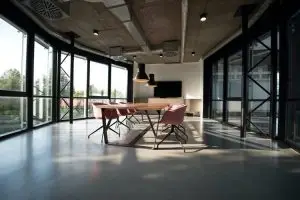
The next time you’re thinking about investing in your office space, don’t run to buy a new couch for the lobby or a new conference table. Instead, make an even bigger impact with lighting.
The Importance of Good Lighting
Lighting is an often underrated aspect of the overall workspace design, but the reality is that lighting makes a big impact on employees at the office. As we all strive to make the transition back into the office as smooth as possible while supporting team members, both office owners and team leaders can benefit from improving their space’s lighting set up.
Lighting makes a tangible impact on employee mood, motivation, and productivity. Studies have demonstrated that spending time in areas with the right lighting can boost vitamin D levels, improve sleep, fight seasonal depression, and cultivate a positive outlook.
On the other hand, fluorescent lighting heightens stress, strains the eyes, and promotes headaches and other unwanted symptoms. In addition to the other health and safety protocols you’re setting up at your office, don’t forget to add lighting to the equation.
Here’s what office owners should consider to enhance their lighting scheme:
Small changes to office lighting can make a noticeable difference in how employees feel throughout the workday.
Opt for Natural Lighting
The best lighting is natural lighting. Sunlight introduces numerous benefits to the workspace, including increased motivation, energy, and productivity. Office owners and business operators who are closing the blinds aren’t getting the perks that Mr. Sun freely offers.
Access to natural lighting is imperative for the workspace, so consider letting the light in as much as possible. Smart glass is a great and easy way to intuitively let the sun in without compromising privacy and protection.
Create a Lighting Experience
Supporting the office’s natural lighting will help your employees shift from task to task and stay alert and focused.
Install electric task lights above tables and desks to provide a gentle boost of lighting within the workspace’s ambient natural lighting scheme. This will allow team members to reap the benefits of various lighting options while going about their workday.
Place Mirrors in Strategic Locations
Besides making your space appear larger, mirrors can also effectively maximize the natural lighting levels within an office.
Install mirrors in key areas so that they reflect the sunlight entering from windows and bounce it around the office. Place the mirror nearby a window in a location where sun rays regularly land and watch the light spread. Toggle with potential placements to figure out the arrangement that best suits your office’s unique lighting needs. If you want to dim the reflections, look for mirrors with metallic sheens or other light-influencing coatings.
These three easy lighting-centric strategies will help keep your office occupants healthy, happy, and well as we ease back into the office workflows. For more commercial real estate tips and tricks, explore the NAI Global Newslink.
Choosing the Right Color Temperature
Not all office lighting is the same. Color temperature, measured in Kelvin, describes how warm or cool a light source appears. Warmer light, around 2700K to 3000K, feels relaxed and is often used in lounges, break rooms and reception areas. Cooler, neutral-to-bright white light, roughly 4000K to 5000K, tends to feel crisp and alert, which is why it is common in open work areas and conference rooms.
Many modern fixtures let you adjust color temperature throughout the day. Brighter, cooler light in the morning can help people feel energized, while gradually warmer light in the late afternoon can feel more comfortable as the day winds down. This approach, sometimes called human-centric lighting, is becoming a popular feature in newly renovated office buildings.
Layer Your Office Lighting
The most comfortable workspaces combine several types of light rather than relying on a single grid of overhead fixtures. Ambient lighting provides general illumination for the room. Task lighting, such as desk lamps and under-cabinet lights, gives employees control over the light where they actually work. Accent lighting highlights artwork, signage or architectural features and helps a space feel finished and welcoming to clients.
Layered office lighting also gives you flexibility for the many different ways your team uses each room. A conference room used for video calls, presentations and brainstorming sessions benefits from separate controls for each layer so the room can be adjusted for every type of meeting.
An Office Lighting Checklist for Tenants and Landlords

Before you sign a lease or renovate a suite, walk the space at different times of day and evaluate the office lighting with these questions in mind:
- How much natural light reaches workstations, and which direction do the windows face?
- Does the office lighting include task lights so employees can adjust brightness at their desks?
- Are fixtures energy-efficient LEDs, and can they be dimmed or controlled by zone?
- Is there glare on screens, and can window treatments reduce it?
- Will the landlord contribute to lighting upgrades as part of a tenant improvement allowance?
Good office lighting is an investment in comfort, focus and retention. For landlords, upgraded office lighting can also help a building stand out to prospective tenants and support stronger lease terms.
Frequently Asked Questions About Office Lighting
How bright should office lighting be?
General work areas are commonly lit to around 300 to 500 lux, with brighter task lighting for detailed work. The right level depends on the type of work, the layout and how much daylight the space receives, so it is worth consulting a lighting professional or designer when planning a new office build-out or renovation.
Does better lighting really affect productivity?
Poor lighting is linked to eye strain, headaches and fatigue, all of which make it harder to concentrate. Comfortable, well-balanced office lighting helps employees stay focused and makes the workplace more pleasant to spend time in.
Who pays for lighting upgrades in a leased office?
It depends on the lease. Some landlords upgrade common areas and building systems on their own, while in-suite improvements are often negotiated as part of a tenant improvement allowance. An experienced tenant representative can help you identify needed improvements early and ask for upgrades during lease negotiations, before you commit to the space.
Are LED fixtures worth the cost?
In most cases, yes. Upgrading to LED is one of the simplest ways to modernize office lighting. LED fixtures use significantly less energy than older fluorescent systems, last longer and can be paired with dimmers, sensors and tunable color temperature. Lower operating costs can benefit both landlords and tenants, depending on how utilities are structured in the lease, and many utilities offer rebates that help offset the upfront cost.
Make Office Lighting Part of Your Next Move
If your current space can’t deliver the light your team needs, it may be time to look for a new office. Browse available office properties on Long Island, or learn how our commercial real estate services can help you find a workspace with large windows, open floor plans and modern lighting systems. Our brokers are part of the NAI Global network, so we can also help companies with offices beyond Long Island.